

There is a specific kind of magic in building software with AI. You describe the app you want in plain English, and a working React version appears on your screen. No syntax to memorize, no late-night Stack Overflow rabbit holes. In a single weekend you can go from a rough idea to a live product that real people log into. That feeling is real, and it is earned. Tools like Cursor, Replit Agent, Bolt, Lovable, and v0 have genuinely changed how quickly an idea becomes a working prototype.
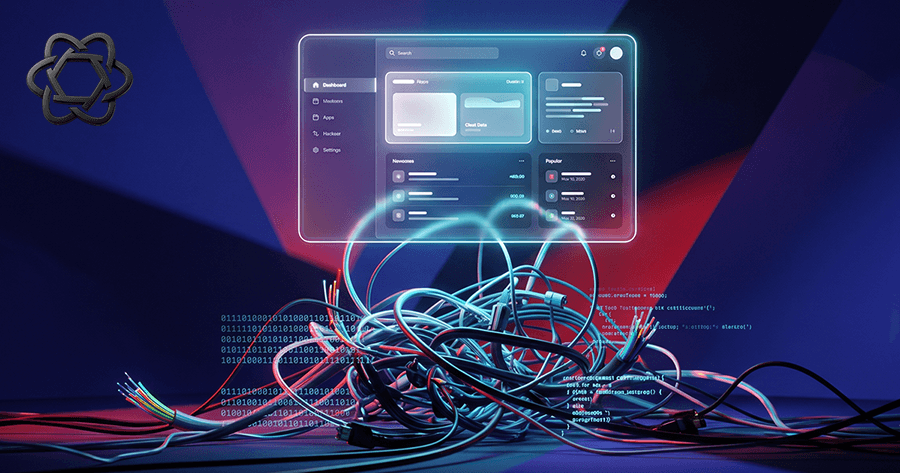
Then week six arrives. You change a button color and authentication breaks. You add one small feature and two unrelated screens stop working. You spend an afternoon prompting the AI to fix an error it already fixed last Tuesday. The app that felt effortless now fights you at every turn.
That resistance has a name. Call it the Vibecoding Tech Debt Tax: the compounding cost of code that was generated rather than designed. And there is hard data behind the feeling. GitClear's 2025 study of AI coding assistants found that code churn, the share of new code that gets rewritten or deleted within two weeks, roughly doubled as AI tools spread through codebases. Over the same period, the share of changed lines that went into refactoring fell from 25% in 2021 to under 10% in 2024, while copy-pasted, duplicated code blocks climbed sharply. In plain terms: AI writes a lot of code very fast, and a growing slice of it is throwaway or duplicated.
This is the moment where vibe coding runs into a wall. Call it the AI Inception Wall: the point where the app is big enough that the model can no longer hold the whole thing in its head, so every fix it suggests risks breaking something it can no longer see. Getting past that wall is not a prompting problem. It is an engineering problem. This article is about how to recognize the wall, why React hits it especially hard, and what to do next.
AI models are excellent at writing isolated pieces of code. Ask for a single dropdown, a form, or a pricing card, and the model will usually get it right. The trouble starts with the connections between the pieces, and React is built almost entirely on connections.
The root cause is simple. An AI agent writes code line by line, optimizing for the immediate prompt in front of it. It does not design the architecture first. So it will happily fix the button you asked about and miss that the fix made the entire page re-render. Three patterns follow from this, and they show up in almost every vibe-coded React app.
Most of a React app's complexity lives in global state orchestration, the job of coordinating shared data across the whole app using tools like Context, Redux, or Zustand. Because the model cannot see the full app at once, it tends to create duplicate copies of the same state in different places, then leaves them to drift out of sync. It also leans on prop-drilling, passing data down through many component layers that do not need it, because that is the path of least resistance for a model working one file at a time. The result is a data layer where nobody, human or machine, can say with confidence where a given value actually lives.
When something breaks, the model's instinct is to append more code rather than restructure what is already there. One patch leads to another until a single file runs 1,500 lines and mixes UI, business logic, and API calls in one place. This is the opposite of component decoupling, the practice of keeping separate parts of the app from depending on each other so a change in one place does not ripple everywhere. A Frankenstein component is fast to generate and miserable to change, which is exactly the trade you do not want as you scale.
React's reactivity is powerful and unforgiving. AI-generated code routinely ships three quiet problems. First, stale closures in useEffect, where old values get captured and reused after they should have updated, so the UI silently shows outdated data. Second, missing or wrong dependency arrays, the list that tells a React effect when to re-run. Third, infinite re-renders, effects that keep triggering themselves in a loop and burn performance for no visible reason. React's own documentation is blunt about this, recommending that teams treat a missing dependency as a compilation error because ignoring it leads to exactly these stale-value and infinite-loop bugs. On top of that, redundant hooks and unused libraries inflate bundle size, the total weight of JavaScript the browser has to download, and Next.js apps start throwing hydration errors, mismatches between the HTML rendered on the server and what React expects in the browser. None of these break loudly. They just make the app slower, heavier, and stranger over time.
You do not need to read the code to know you have hit the wall. You feel it in how the work goes. Here are the four symptoms, in the order most founders notice them.
You spend three hours prompting the AI to fix a single error. It fixes the error, then reintroduces a bug it already solved yesterday. You are no longer building. You are negotiating with a system that keeps forgetting the last thing it learned. When your day is spent re-explaining context the model should already have, that is the wall talking.
One small new feature breaks three unrelated user journeys. Checkout goes down because you touched the profile page. This is what happens when nothing is decoupled: every part of the app is quietly wired to every other part, so there is no such thing as a small change. This pattern is measurable at scale. Google's 2024 DORA report, one of the most respected studies of software delivery, found that higher AI adoption was associated with an estimated 7.2% drop in delivery stability even as it sped individual coding tasks up. Faster to write, easier to break. That is regression sprawl in a single statistic.
Every AI model has a context window, a limit on how much of your code it can read at one time. Early on, your whole app fits inside it. As the repo grows, it stops fitting, and the model starts answering with generic, broken snippets because it can only see a fraction of the picture. The tool that once felt omniscient now guesses. That is not a prompt you can fix. It is a size threshold you have crossed.
This is the red flag that costs the most and shows the least. AI-written code is handling your payments, your authentication, and your user data with no structural review, and the odds are not in your favor. Veracode's 2025 GenAI Code Security Report tested code from more than 100 large language models and found that 45% of AI-generated samples introduced a known OWASP Top 10 security vulnerability. For Java the failure rate hit 72%, and across the board the models failed to defend against cross-site scripting in 86% of relevant cases. Worse, a Stanford study found that developers using AI assistants not only wrote more insecure code, they were more confident that their code was secure. The danger is not just the hole in the wall. It is that vibe coding makes you feel safest right when you are most exposed.
If two or more of those flags feel familiar, the fix is not another prompt or another tool. It is a human engineer who can hold the whole architecture in view. There are two ways in, depending on how much certainty you need first.
A code audit is the smaller first step. A senior React engineer reads your architecture and tells you plainly what is broken, where the security holes are, and whether you need a targeted refactor or a deeper rescue. You get a clear map of the codebase and an honest answer about what it will take to make it stable. If you want to understand your situation before you commit to anything larger, this is the place to begin.
Untangling an AI-generated React codebase without halting production is a specialist job. A generalist developer or a broad freelance marketplace tends to struggle here, because the work requires someone who lives in React, Next.js, and Node.js every single day and recognizes these exact failure patterns on sight. This is where ReactSquad fits. We place vetted, senior, full-time engineers with five or more years of experience, focused on one stack, at a flat $85 per hour with no recruiting fees or markup. Matching takes about 48 hours, and every engineer clears a rigorous vetting process before they reach you: multiple interviews plus a four-week paid test project.
Here is what that looks like in practice. One founder we work with came to us with an AI-built MVP that had hit exactly this wall. We placed a senior engineer who rebuilt the foundations while the product kept shipping to users the entire time. He still vibe-codes the parts of the product he knows best. The engineer owns the parts that have to hold up in production. Another founder needed HIPAA compliance he had no way to build on his own; the engineer we matched him with brought the codebase up to a level that could meet that bar. As one client who came to us after trying several developer marketplaces put it, our engineers were "on a whole different level."
None of this means you should stop using AI. AI remains a genuinely powerful execution tool, and the fastest teams will keep using it to move quickly. What changes as you scale is that human oversight, real tests, and code governance stop being optional. They become the thing that lets you keep moving fast without breaking what already works.
So reframe the moment. Bringing in senior engineering is not admitting that vibe coding failed. Vibe coding did its job. It got you from zero to a real product with real users faster than any team could have a few years ago. Hiring a senior engineer is the next stage of the same story. It is your product graduating from something you talked into existence to something built to last.
You already proved the idea works. The wall you are hitting is a sign of success, not failure. It means people are using the thing you built, and now it needs to hold their weight.
Book a call with ReactSquad and get matched with a senior React engineer in about 48 hours. Every engagement starts with a 14-day risk-free trial.